
2 posts tagged with "deployment"

View all tags

Should an AI Agent Run on a Personal Computer or a Server?

· 5 min read

Many people first try an AI Agent as a desktop tool. That works well for experiments, coding, and one-off tasks. But once an Agent reads files, calls external systems, waits for approval, generates reports, or needs to be used repeatedly by a team, the question is no longer only whether the model is capable enough. It is where the Agent should run.

This article is not about choosing a particular model. It explains when a personal computer is sufficient, when a server-side deployment is the better fit, and why teams that depend on Agents for ongoing work usually need a long-running service.
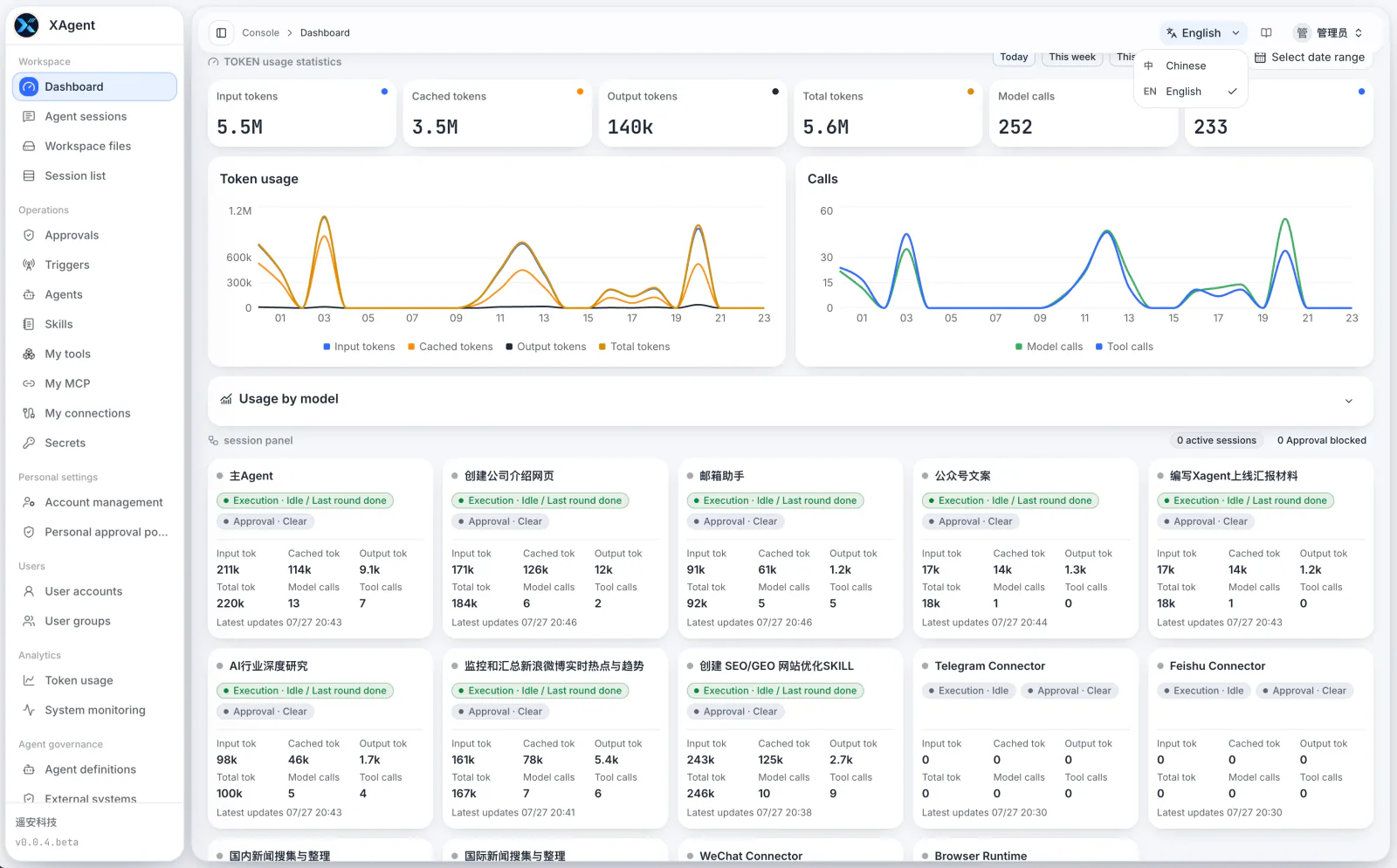
The xAgent server-side dashboard showing centralized model usage, Sessions, and Tool calls

WorkBuddy vs. Codex: Where xAgent and Other Agents Fit

· 9 min read

For a WorkBuddy vs. Codex comparison, start with the deliverable. WorkBuddy's official overview covers documents, spreadsheets, presentations, research, and coding. Codex's official overview emphasizes repository work, feature development, refactoring, and code review. Their capabilities overlap; this is not a strict split between office work and code.

xAgent, QoderWork, and OpenClaw add other deployment and workflow choices. The useful comparison starts with who will use the product, where tasks run, whether work involves a team and business systems, and who owns the security and operational boundaries.

Updated scope (2026-10-01): the original publication date remains 2026-08-01. This revision checks product positioning and execution models against the linked official material, and xAgent's personal-policy overrides against its current approval guide, which was checked against source 43d2698. This is a documentation comparison, not a same-task benchmark, complete security audit, or commercial-plan review. Older xAgent binaries may differ from the current guide.